
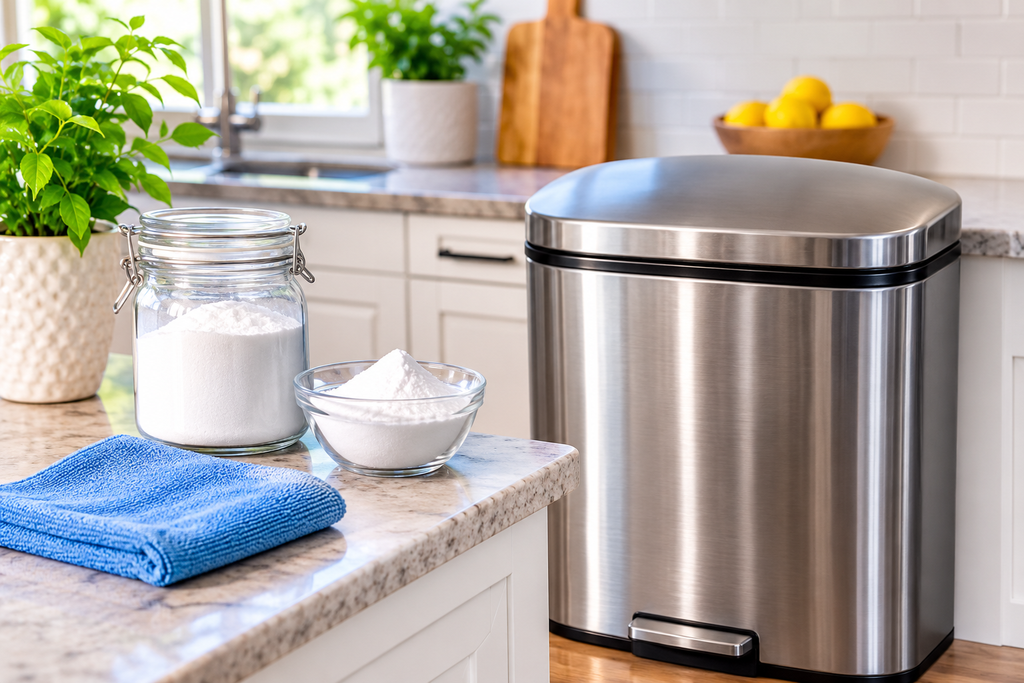
A bad smell coming from your kitchen trash can make the entire kitchen uncomfortable, even when the garbage bag is not completely full. How to keep kitchen trash from smelling comes down to controlling food moisture, removing waste regularly, preventing leaks, and cleaning hidden residue before odors return.
You do not need expensive cleaning products to maintain a fresher kitchen. A few practical habits and the right cleaning routine can make a noticeable difference.
Quick Answer:
To keep kitchen trash from smelling, empty the bin regularly, seal wet food scraps, use leak-resistant garbage bags, and clean spills before they build up. Wash the can when needed and let it dry completely before adding a new liner. Baking soda may also help control lingering odors.
Table of Contents
What You Need to Know
- Empty kitchen trash before food waste begins producing strong odors.
- Seal wet food scraps to prevent liquid leaks and decomposition odors.
- Use baking soda as an optional odor-control aid.
- Wash and completely dry the trash can whenever residue develops.
- During summer, empty food waste more frequently because warm conditions can accelerate decomposition.
Why Does Kitchen Trash Smell So Bad?
Kitchen trash usually smells because food scraps, moisture, and organic residue begin breaking down inside the garbage bag or container. Warm temperatures can make these odors develop more quickly.
The main source of kitchen garbage odor is usually decomposing organic waste combined with trapped moisture.
Common causes include:
- Decomposing food: Meat scraps, vegetables, fruit peels, and leftover meals can produce unpleasant odors as microorganisms break down organic material.
- Trapped moisture: Liquid from food packaging and leftovers can collect at the bottom of the garbage bag.
- Leaking garbage bags: Small holes allow dirty liquid to reach the trash can itself.
- Dirty lids and rims: Food residue can remain around the lid, hinges, and upper edges.
- Warm temperatures: Heat can accelerate decomposition and make unpleasant smells more noticeable.
- Poor cleaning habits: A trash can that is repeatedly used without proper washing can accumulate residue.
One surprising detail: An empty garbage can is not necessarily a clean garbage can. Even after removing the garbage bag, a thin layer of food residue can remain on the bottom, lid, or inner walls.
How to Keep Kitchen Trash From Smelling Every Day
The most reliable way to prevent kitchen trash odors is to control moisture, remove food waste regularly, and keep the container clean.
A consistent daily routine is more effective than trying to cover an unpleasant smell with fragrance.
1. Empty Your Trash Regularly

Do not wait until the garbage bag becomes completely full before removing it.
Food scraps can begin producing noticeable odors while the bag still has available space.
- Check your kitchen trash at least once daily.
- Remove meat, fish, and other particularly odorous food waste promptly.
- Empty the bin sooner if you notice liquid accumulation or a strong smell.
- Tie the garbage bag securely before carrying it outside.
The exact emptying frequency depends on the amount and type of waste your household produces.
2. Seal Wet Food Scraps

Wet food waste is a common source of unpleasant garbage odors.
Sealing wet scraps helps prevent liquid leaks and reduces direct exposure of food waste to the surrounding air.
Try these practices:
- Drain excess liquid from food scraps when practical.
- Place particularly wet waste in a securely closed bag.
- Avoid throwing uncovered soup, sauces, or leftover liquids directly into the trash.
- Use a separate food-waste container if your local collection system supports it.
For meat and fish scraps, follow local waste collection guidance. If disposal must wait, keep the scraps securely contained and consider freezing them until collection day where practical and permitted.
3. Use Properly Sized Garbage Bags
A garbage bag that is too small can slip inside the trash can or tear under pressure.
Choose a bag that fits the container’s capacity and stays securely around its rim.
A properly fitted garbage bag reduces direct contact between food waste and the trash can’s interior.
Check the following:
- The bag reaches the bottom of the container.
- The bag has enough extra material to fold over the rim.
- The liner does not slide down when waste is added.
- The bag has no visible holes or damaged seams.
Replace a leaking bag immediately instead of waiting for the next scheduled garbage collection.
4. Clean the Trash Can Lid and Rim

Many people clean the inside of the trash can but overlook the lid.
Food particles, sticky residue, and dirty fingerprints can collect around the lid, hinges, and rim.
Use a damp cloth with a suitable household cleaner to wipe these areas. Follow the cleaner’s label instructions, paying attention to material compatibility.
Cleaning the lid and rim helps remove odor sources that replacing the garbage bag cannot address.
5. Keep the Trash Can Dry
Moisture encourages residue to stick to surfaces and can make an unpleasant-smelling bin harder to maintain.
After washing the container, rinse away cleaning residue and allow the inside to dry completely.
Do not immediately install a new garbage bag while the bottom is still wet.
6. Keep Food Waste Contained
Use a small sealed container for particularly smelly food scraps if your household produces them frequently.
Keep the container clean and empty it according to your local waste collection schedule.
A separate container can also prevent fish scraps, meat packaging, and wet leftovers from contaminating other kitchen waste.
7. Inspect the Area Around the Trash Can
Sometimes the smell is not coming from the garbage bag at all.
Check the floor beneath the bin, nearby cabinets, and the wall behind the container.
Clean any leaked liquid and inspect the surrounding surfaces before assuming the trash can itself is responsible.
Does Baking Soda Help Keep a Trash Can From Smelling?
Yes. Baking soda can help control some unpleasant odors inside a kitchen trash can, making it a useful low-cost addition to regular cleaning.
Baking soda is a mild alkaline powder commonly used as an odor-control aid in household cleaning.
However, baking soda does not remove food residue, repair leaking garbage bags, or replace washing the trash can.
How to Use Baking Soda in a Trash Can

Follow these steps:
- Clean the trash can first. Remove the garbage bag and wash away visible food residue.
- Dry the container. Allow the bottom and inner walls to dry completely.
- Add a small amount of baking soda. Sprinkle approximately 1–2 tablespoons across the dry bottom of an average household kitchen bin.
- Install a fresh garbage bag. Make sure the liner fits securely.
- Replace contaminated baking soda. If baking soda becomes wet or dirty, remove it and add fresh powder after cleaning and drying the bin.
The 1–2 tablespoon amount is a practical starting suggestion, not a scientifically established dosage for every trash can size.
Baking Soda vs. Other Odor Absorbers
Different odor-control materials serve different purposes.
| Odor-control option | Main purpose | Important limitation |
|---|---|---|
| Baking soda | Helps control some odors | Does not clean food residue |
| Activated charcoal | Adsorbs certain odor compounds | Performance depends on product design and exposure |
| Commercial odor absorber | Provides additional odor control | Formulations vary |
| Fragranced deodorizer | Adds fragrance or masks odors | May not remove the original odor source |
Choose an odor absorber as an additional maintenance tool, not as a replacement for proper garbage disposal and cleaning.
How to Keep Trash Can From Smelling in Summer
Kitchen trash odors can become more noticeable during hot weather because higher temperatures can accelerate the breakdown of organic food waste.
During summer, focus on removing wet food scraps quickly, preventing leaks, and keeping the garbage container clean and dry.
Use these five summer practices:
- Empty food waste more frequently. Do not wait for the kitchen bin to become completely full if food scraps are producing odors.
- Seal meat and fish scraps. Place particularly odorous waste in securely closed bags.
- Prevent liquid accumulation. Drain excess food liquids before disposal when practical.
- Clean spills immediately. Wash the bin if a garbage bag leaks.
- Keep the container away from excessive heat. Avoid placing the trash can beside a hot oven, radiator, or direct sunlight where practical.
If your household cannot empty the garbage every day, consider separating particularly odorous food waste and following local disposal guidance.
Should You Keep Your Kitchen Trash Can Covered?
A covered trash can helps contain exposed garbage and can reduce the spread of odors into the surrounding kitchen.
However, a lid does not eliminate the source of unpleasant smells.
A covered container still needs regular emptying, cleaning, and drying. Check the lid’s underside because trapped food residue can become another odor source.
How to Get Smell Out of a Trash Can
If your kitchen garbage bin already smells unpleasant, replacing the garbage bag may not solve the problem. You need to remove the residue responsible for the odor.
A proper cleaning process involves removing waste, washing contaminated surfaces, rinsing away cleaner residue, and drying the container completely.

Step-by-Step Trash Can Cleaning Method
Step 1: Remove the Garbage Bag
Take out the old garbage bag and inspect the bottom of the container.
Look for leaking food liquids, sticky residue, and pieces of food stuck to the inner walls.
Step 2: Wash the Container
Use warm water and a suitable household cleaning product according to its label.
Clean the inside, outside, bottom, lid, rim, and accessible hinges.
Step 3: Scrub Stubborn Residue
Use a non-abrasive sponge or cleaning brush to remove visible buildup.
Pay particular attention to corners and seams where food residue can collect.
Step 4: Rinse Thoroughly
Rinse away loosened dirt and cleaning-product residue according to the product instructions.
Never mix household cleaning chemicals. In particular, never mix bleach with ammonia or acidic cleaners such as vinegar.
Step 5: Dry the Trash Can Completely
Allow the container to air-dry with the lid open.
Check the bottom and corners before installing a fresh garbage bag.
Step 6: Install a Fresh Liner
Use a properly fitted garbage bag and make sure the liner does not slip into the container.
Cleaning frequency: Inspect the trash can regularly and clean it whenever leaks, sticky residue, or unpleasant odors develop. A weekly inspection is a useful household maintenance habit, but actual washing frequency depends on usage and contamination.
What Should You Avoid When Cleaning a Trash Can?
- Do not mix bleach with vinegar or ammonia.
- Do not use abrasive materials that can damage the container.
- Do not put a new liner into a wet trash can.
- Do not use strong fragrances to cover up leaking food waste.
- Do not ignore dirty lids, hinges, or cabinet surfaces.
For additional household hygiene guidance, consult the CDC hygiene resources and follow the instructions on your cleaning products.
Kitchen Trash Odor Troubleshooting Chart
Different garbage odors can have different causes. Identifying where the smell originates helps you choose the right cleaning or prevention method.
Use this reference chart to identify common kitchen trash problems and the practical action to take.
| Problem | Possible cause | Recommended action |
|---|---|---|
| Strong smell from fresh trash | Wet or decomposing food | Seal wet food scraps |
| Sour liquid at the bottom | Leaked food residue | Wash and dry the bin |
| Smell remains after cleaning | Residue on lid, rim, or seams | Inspect and clean hidden areas |
| Odor increases in summer | Higher temperatures | Empty food waste more frequently |
| Empty bin still smells | Remaining organic residue | Deep-clean and dry thoroughly |
| Smell around cabinet | Trapped odor or leaking liner | Clean cabinet surfaces and inspect for leaks |
The causes listed are possibilities, not definitive diagnoses. The source of an odor depends on the waste, container, and surrounding environment.
Save or screenshot this Kitchen Trash Odor Troubleshooting Chart
It covers common odor problems, their possible causes, and the practical steps you can take to address them.
Why Does My Trash Can Smell Even When Empty?
An empty trash can can still smell because removing the garbage bag does not necessarily remove the food residue left behind.
The most common places to inspect are the bottom, inner walls, lid, hinges, rim, and nearby cabinet surfaces.
Check these five areas:
- Bottom of the bin: Look for dried food liquid and sticky residue.
- Inside walls: Check for food particles and grease.
- Underside of the lid: Inspect areas where moisture and residue may collect.
- Hinges and seams: Clean accessible gaps where dirt can accumulate.
- Surrounding cabinet: Check for leaked liquid or contaminated surfaces.
If the trash can continues smelling after thorough cleaning and complete drying, inspect the garbage bag storage area and surrounding kitchen surfaces.
An unusual persistent smell may also come from another household source, such as a drain or spoiled food outside the bin.
Common Kitchen Trash Odor Mistakes
Some cleaning habits can make garbage odors return even after you have removed the old waste.
The biggest mistake is treating the smell instead of removing the material producing it.
Avoid these common problems:
| Common mistake | Better approach |
|---|---|
| Spraying fragrance over garbage | Remove the waste and clean the source |
| Reusing a leaking garbage bag | Replace it immediately |
| Cleaning only the inside | Inspect the lid, rim, and hinges |
| Installing a liner in a wet bin | Dry the container first |
| Leaving wet food uncovered | Seal food scraps securely |
| Ignoring the surrounding cabinet | Clean the floor and nearby surfaces |
When Should You Replace a Kitchen Trash Can?
A trash can does not automatically need replacing because it smells bad.
First, inspect and clean the container thoroughly. However, replacement may be reasonable if the bin has deep cracks, damaged surfaces, persistent contamination, or components that cannot be cleaned properly.
For plastic containers, deep scratches can also make residue harder to remove.
Are Kitchen Trash Can Deodorizers Worth Using?
Kitchen trash can deodorizers can provide additional odor control after you have addressed the main causes of unpleasant smells.
A deodorizer is most useful as part of a maintenance routine, rather than as a solution for dirty or leaking garbage.
Common options include baking soda, activated charcoal products, and purpose-designed trash can deodorizer products.
If you regularly struggle with odors despite good cleaning habits, a kitchen trash can with a built-in deodorizer compartment or compatible odor-control filter may be worth considering.
For example, you can explore our existing article about trash cans with built-in deodorizers to understand how these odor-control features fit into a kitchen waste-management setup.
This type of equipment is an optional extra. It does not replace emptying, cleaning, or drying the garbage bin.
Frequently Asked Questions
1. How to keep kitchen trash from smelling after cleaning?
To keep kitchen trash from smelling after cleaning, remove all food residue, rinse the container properly, and allow it to dry completely before installing a fresh garbage bag. Clean the lid, rim, and hinges as well. If the odor returns, inspect the surrounding cabinet and floor for leaked food liquids that may have been missed during cleaning.
2. How do you keep a garbage can from smelling in the garage?
Keep a garage garbage can clean, dry, and securely covered. Use leak-resistant garbage bags and remove food waste regularly, especially during hot weather. Clean spills immediately and inspect the container for residue. Keep the garbage can away from excessive heat where practical, and follow your local waste collection requirements for storing household garbage.
3. How do you remove smell from an outdoor garbage can?
Remove the garbage bag and wash the outdoor container with a suitable cleaning product and water. Scrub visible food residue from the bottom, sides, lid, and handles. Rinse according to the cleaner’s instructions and allow the container to dry completely. Never mix bleach with vinegar or ammonia. Keep the container covered and avoid leaving food liquids inside.
4. How do you keep a trash cabinet from smelling?
To keep a trash cabinet from smelling, clean the cabinet floor, walls, and surfaces around the garbage container. Check for leaking garbage bags and spilled food liquids. Allow cleaned surfaces to dry before returning the trash can. A properly fitted liner and regular garbage removal can help prevent odors from returning inside an enclosed cabinet.
5. Why does an outdoor garbage can smell bad?
An outdoor garbage can may smell because of decomposing food, accumulated moisture, leaking bags, or residue left inside the container. Warm weather can make the odor more noticeable. Remove old waste, clean the container, and allow it to dry. Keeping wet food scraps sealed and following local collection schedules can help control unpleasant smells.
6. How do you get rid of garbage smell in the house?
Start by identifying where the smell originates. Check kitchen trash cans, food-waste containers, cabinets, and nearby floors for leaking liquids or spoiled food. Remove the source, clean contaminated surfaces, and allow them to dry. If the odor persists after cleaning, inspect other possible sources, including kitchen drains and hidden food waste.
7. Does baking soda eliminate garbage smells?
Baking soda can help control certain unpleasant odors, making it a useful addition to kitchen trash maintenance. Sprinkle a small amount into a clean, dry trash can before installing a fresh liner. Replace the powder if it becomes wet or contaminated. Baking soda cannot remove stuck food residue, so regular washing is still necessary.
8. What can you put at the bottom of a trash can to absorb odors?
You can use a small amount of baking soda or a suitable commercial odor absorber at the bottom of a clean, dry trash can. Some products use activated charcoal to adsorb certain odor compounds. Follow product instructions and keep loose powders away from children and pets. Replace contaminated materials and remember that odor absorbers cannot fix leaking garbage bags.
9. How often should you clean a kitchen trash can?
Inspect your kitchen trash can regularly and wash it whenever food residue, liquid leaks, or unpleasant odors develop. A weekly inspection is a useful starting habit, but some households may need more frequent cleaning. Always pay attention to the bottom, lid, rim, and hinges. Allow the container to dry completely before installing a fresh garbage bag.
10. Should you replace a trash can that still smells after cleaning?
Not necessarily. First, inspect hidden areas, including the lid, hinges, seams, and surrounding cabinet. Wash the container thoroughly and let it dry completely. If the smell remains because of deep cracks, damaged surfaces, or contamination that cannot be removed, replacing the trash can may be the more practical solution.
Helpful Household Waste and Cleaning Resources
For additional information about responsible household waste handling and food safety, consult these resources:
- US Environmental Protection Agency — Recycling and Waste Management
- US Food and Drug Administration — Food Safety
- Centers for Disease Control and Prevention — Hygiene
These resources provide broader household waste, food safety, and hygiene information. Follow local waste-disposal rules and the instructions provided with cleaning products.
What to Do Next
A fresher kitchen starts with consistent waste management, proper cleaning, and controlling moisture before unpleasant odors develop.
If you want to explore additional odor-control options, read our article about trash cans with built-in deodorizers.
You can also explore these future SmartTrashHub topics as they become available:
- [CONTENT GAP: How to Clean a Smart Trash Can]
- [CONTENT GAP: Best Smart Trash Cans With Odor Control]
- [CONTENT GAP: How to Replace a Smart Trash Can Filter]
Want a cleaner kitchen with fewer unpleasant surprises? Subscribe to the SmartTrashHub newsletter for practical smart-trash-can maintenance tips, cleaning reminders, and odor-prevention advice.