
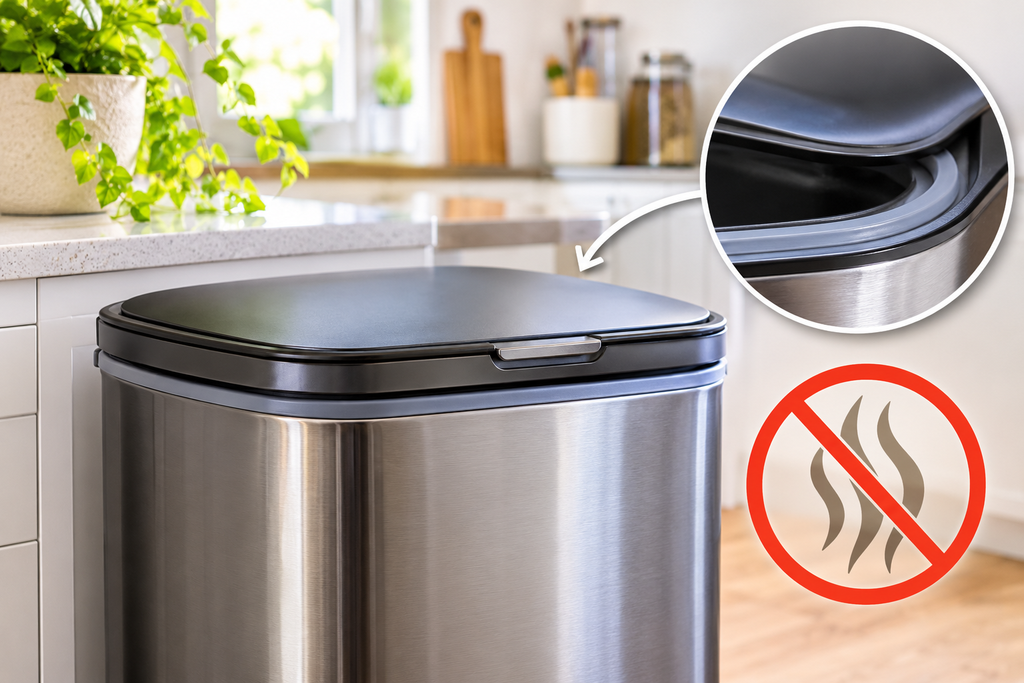
When your kitchen trash can smells even with the lid closed, the odor can spread through the entire room and make your kitchen unpleasant. An airtight trash can may help, but its effectiveness depends on the lid, sealing mechanism, and what you throw away.
Quick Answer: An airtight trash can can significantly reduce garbage odors escaping while the lid is closed, but it cannot eliminate smells completely. A tight-fitting lid, a properly maintained rubber gasket, and a secure closure help contain odors. Smells can still escape when the lid opens, the seal becomes damaged, or waste inside produces strong odors.
Table of Contents
What You Need to Know
- A tightly fitted lid helps reduce odors escaping from household garbage.
- A rubber gasket creates a sealing barrier between the lid and the rim.
- An airtight trash can does not eliminate odors completely, especially when opened.
- Dirty, damaged, or poorly fitted seals can reduce odor-containment performance.
- Regular cleaning and proper waste handling remain important for odor control.
Do Airtight Trash Cans Stop Smell?
Airtight trash cans reduce the amount of garbage odor escaping when properly closed, but they do not guarantee a completely odor-free kitchen. The effectiveness depends on how well the lid seals, the condition of the gasket, and the type of waste inside.
A trash can containing food scraps, meat packaging, or wet waste can develop strong odors. A sealed lid helps contain those smells inside the container instead of allowing them to spread freely around your kitchen.
However, the odor may become noticeable as soon as you open the lid. A seal controls odor escape while closed; it does not remove the source of the smell.
How an Airtight Trash Can Works
An airtight trash can works by reducing the openings between the lid and the container through which odor-containing air can escape.
The sealing system usually relies on the lid’s fit, a gasket, and a closing mechanism that keeps the lid in position.
How the Lid Creates a Barrier
A tight-fitting lid covers the opening of the trash can and limits the gaps around its rim.
The smaller the gaps, the fewer pathways available for odor-containing air to escape. A lid that sits unevenly, bends, or leaves visible gaps may provide less odor containment.
What a Rubber Gasket Does
A rubber gasket is a flexible sealing strip fitted around the lid or rim to help close gaps between two surfaces.
When the lid closes, the gasket contacts the container’s rim. That contact helps create a more complete seal than a simple lid resting loosely on top of the bin.
The gasket should be continuous, clean, and free from tears or deformation.
Why the Closing Mechanism Matters
The closing mechanism helps hold the lid in its intended closed position. Some designs rely on the lid’s weight, while others use hinges, latches, or other mechanisms.
A gasket cannot perform effectively if the lid does not press against the sealing surface properly. A crooked lid, damaged hinge, or obstruction around the rim can compromise the seal.
What Makes a Trash Can Truly Airtight?
A trash can’s odor-containment performance depends on the complete sealing design, not just the label “airtight.”
Before choosing a container, examine these features.
1. A Properly Fitting Lid
The lid should sit evenly around the opening. Gaps, loose edges, or misalignment can allow odor-containing air to escape.
2. A Continuous, Undamaged Seal
Look for a gasket that follows the sealing perimeter without obvious breaks. A missing section or damaged strip may compromise sealing.
3. A Lid That Stays Fully Closed
The lid should not remain partially open because of an overloaded bag, trapped food packaging, or a malfunctioning mechanism.
4. Clean Sealing Surfaces
Food residue, grease, and debris can collect around the lid and rim. These deposits may interfere with lid contact and become another source of unpleasant smells.
Airtight vs. Regular Trash Cans
A sealed trash can is designed to reduce gaps around the lid, while a conventional lidded bin may simply cover the opening without creating a tight seal.
| Feature | Airtight/sealed design | Ordinary lidded design |
|---|---|---|
| Lid contact | Designed for closer sealing | May have larger gaps |
| Odor containment | Better containment when properly sealed | Odors may escape more freely |
| Gasket | May include a sealing gasket | Often lacks a gasket |
| Lid opening | Odors can escape | Odors can escape |
| Maintenance | Seal needs inspection and cleaning | Lid and rim need cleaning |
| Performance | Depends on seal and closure quality | Depends on lid design |
A conventional trash can with a well-fitting lid may still control odors reasonably well. A product marketed as airtight may perform poorly if its lid, gasket, or closure is defective.
The actual sealing design matters more than the product label.
Airtight Trash Can Odor-Control Diagnostic Chart
Use this chart when choosing a trash can or trying to figure out why your existing bin smells.
| Feature | What it does | What to check |
|---|---|---|
| Lid fit | Reduces openings where odor can escape | Lid sits evenly around the rim |
| Rubber gasket | Creates sealing contact around the lid | Seal is continuous, clean, and undamaged |
| Closing mechanism | Helps keep the lid against the sealing surface | Lid stays fully closed |
| Inner bucket | Makes waste handling and cleaning easier | Bucket can be removed and cleaned |
| Waste management | Reduces odor sources inside the container | Wet waste and leaking bags are managed |
Save or screenshot this Airtight Trash Can Odor-Control Diagnostic Chart — it covers the key sealing features to check before buying or troubleshooting a trash can.
Why Does an Airtight Trash Can Still Smell?
An airtight trash can may still produce noticeable odors because sealing the lid does not stop waste from decomposing or remove odor-producing material inside the container.
Common causes include:
- The lid is not closing properly: A bag, food wrapper, or other object may prevent complete closure.
- The gasket is dirty or damaged: Residue or tears can interfere with the sealing contact.
- The lid is opened frequently: Odor-containing air escapes whenever the container is opened.
- The waste itself produces strong odors: Wet food scraps, meat waste, and leaking garbage bags can create unpleasant smells.
- The container needs cleaning: Residue on the lid, rim, or inner bucket can continue producing odors even after the trash bag is removed.
A surprising detail is that the trash bag may not be the only source of the smell. Residue around the lid’s sealing surface can continue smelling after you replace the bag.
Does an Airtight Trash Can Work Better for Kitchen Waste?
An airtight trash can can be useful in kitchens because food scraps and wet garbage often produce stronger odors than dry household waste.
The benefit is most noticeable when the trash can remains closed between uses and its lid seals properly.
Food Scraps
Vegetable peels, leftover food, and other scraps can produce unpleasant odors as they break down. Keeping them inside a closed container helps reduce odor escape into the kitchen.
Wet Waste
Wet garbage may produce stronger smells and leaks. Use a suitable trash bag and avoid allowing liquid to collect at the bottom of the container.
Small Kitchens
In a small kitchen, garbage odors can become noticeable quickly because there is less space between the trash can and the people using the room.
A well-sealed lid can help contain odors, but frequent opening and poor maintenance can reduce the benefit.
Frequently Opened Trash Cans
If the trash can is opened repeatedly during cooking, odors may escape each time. A tight seal is most useful during the periods when the container remains closed.
How to Improve Odor Control in a Sealed Trash Can
You can improve odor containment by keeping the seal clean, closing the lid properly, and managing waste before strong smells develop.
Step 1: Keep the Lid Fully Closed
After throwing away waste, check that the lid returns to its fully closed position.
Avoid forcing excess garbage into the bin where it can prevent the lid from sealing.
Step 2: Inspect the Gasket
Look around the entire sealing surface for tears, missing sections, dirt, or deformation.
If the gasket is damaged, check whether the manufacturer offers a compatible replacement.
Step 3: Clean the Lid and Rim
Remove visible food residue, grease, and debris from the lid and the area where the lid contacts the container.
Follow the manufacturer’s cleaning instructions, particularly if the gasket is removable.
Step 4: Manage Wet and Leaking Waste
Use bags appropriate for your trash can. If a bag leaks, clean the inner container instead of simply placing another bag over the residue.
Wet waste left inside the container can continue producing unpleasant odors.
Step 5: Empty the Trash When Needed
Do not wait for the garbage to produce a strong smell before emptying the container.
The appropriate emptying frequency depends on the type and amount of waste, temperature, and household use.
Step 6: Clean the Inner Bucket
If the trash can has a removable inner bucket, take it out and clean it according to the manufacturer’s directions.
Pay attention to the bottom, corners, and areas where liquid or food residue can collect.
Step 7: Manage Particularly Odorous Waste Separately
If certain food scraps produce strong smells, consider managing them separately according to your local waste collection requirements.
This can reduce the amount of odor-producing waste stored in the main kitchen bin.
Common Mistakes That Reduce Odor Control
Even a trash can designed with a sealing gasket can perform poorly if the container is used or maintained incorrectly.
| Mistake | Why it causes problems | What to do |
|---|---|---|
| Overfilling the trash can | Waste can obstruct the lid | Remove the bag before it interferes with closure |
| Ignoring the gasket | Dirt or damage can weaken sealing contact | Inspect and clean it regularly |
| Leaving the lid partly open | Creates a direct path for odors | Ensure the lid closes completely |
| Ignoring liquid leaks | Residue can remain inside the bin | Clean the inner container |
| Assuming airtight means odor-free | Waste continues producing odors | Maintain the container and manage waste properly |
| Buying based only on marketing | The sealing design may not match expectations | Check lid fit and seal construction |
The most common practical mistake is focusing only on the lid while ignoring the sealing surface and waste inside the bin.
What to Check Before Buying an Airtight Trash Can
If odor containment is your main priority, look for a trash can with a lid designed to close tightly and a continuous sealing gasket. Compare the seal design, cleaning requirements, and capacity before choosing a model.
Consider these features before purchasing:
- Lid fit and closure
- Gasket material and construction
- Ease of cleaning
- Capacity suitable for your household
- Removable inner bucket
- Replacement seals, if available
- Ease of opening without compromising closure
A 13-gallon kitchen trash can may suit some households, but capacity alone does not determine odor-control performance.
[CONTENT GAP: Best odor-control trash cans for kitchens — future commercial comparison article.]
Common Mistakes and Troubleshooting
If your sealed trash can smells despite being closed, start by checking the seal and the container’s cleanliness rather than assuming the trash bag is the problem.
| Problem | Likely cause | Practical solution |
|---|---|---|
| Smell around the lid | Poor lid fit or dirty gasket | Clean and inspect the sealing surface |
| Lid won’t close | Overfilled bag or obstruction | Remove excess waste |
| Smell after changing bag | Residue inside the container | Wash the inner bucket |
| Odor returns quickly | Strong-smelling waste | Manage waste and empty the bin as needed |
| Lid feels loose | Closure or hinge issue | Check the mechanism and manufacturer instructions |
If the lid or gasket is visibly damaged, cleaning alone may not restore its sealing performance. Check whether replacement parts are available.
How to Reduce Food Waste and Odor-Producing Garbage
Reducing the amount of food that becomes garbage can also help manage waste in your kitchen.
The U.S. Environmental Protection Agency recommends preventing wasted food where possible and identifies options such as donating edible surplus food and composting appropriate food scraps.
You can read the EPA’s Preventing Wasted Food at Home resource for practical food-management ideas. This supports better waste management, although it is not a test of trash-can sealing performance.
Frequently Asked Questions
Do airtight trash cans completely eliminate garbage odors?
No. Airtight trash cans can reduce odors escaping while the lid is closed, but they cannot guarantee complete odor elimination. The waste inside continues producing odors, and those odors may escape when you open the lid. Seal quality, cleanliness, waste type, and how frequently the container is opened all affect the result. A properly maintained gasket and tight lid help contain smells but do not remove the odor source.
Does a rubber gasket stop trash smells?
A rubber gasket helps reduce gaps between the trash can lid and its rim. That tighter contact can limit the escape of odor-containing air while the container remains closed. However, a gasket is not a guarantee against odors. Dirt, tears, deformation, or an improperly fitted lid can reduce its effectiveness. Cleaning and inspecting the gasket regularly helps maintain the sealing contact.
Can trash smell escape when an airtight lid opens?
Yes. Opening an airtight trash can exposes the waste inside to the surrounding air, allowing odors to escape. A tightly sealed lid helps contain smells between uses, but the opening process itself can release unpleasant odors. This is particularly noticeable with wet food scraps, spoiled food, or other strongly odor-producing waste. The seal works best when the trash can is closed between uses.
Why does my sealed trash can smell even when closed?
A sealed trash can may smell because the lid does not fit properly, the gasket is dirty or damaged, or waste residue has accumulated inside the container. A trash bag can also leak, leaving odor-producing material on the inner bucket. Check the lid, gasket, rim, and container interior. Cleaning these surfaces and correcting closure problems may improve odor containment.
Are airtight trash cans good for kitchens?
Airtight trash cans can be useful in kitchens because they help contain odors from food scraps and household garbage while closed. Their effectiveness depends on the sealing design and maintenance. They may be particularly helpful in smaller kitchens where garbage smells become noticeable quickly. However, the bin still needs regular cleaning, and strong-smelling waste may need to be removed before odors build up.
How often should I empty an airtight trash can?
There is no universal emptying schedule that works for every household. The appropriate frequency depends on the amount of garbage, food scraps, moisture, room temperature, and how strongly the waste smells. Empty the trash before it becomes excessively full or develops strong odors. Wet or particularly odor-producing waste may need more frequent disposal than dry household garbage.
Is a 13-gallon airtight trash can enough for a kitchen?
A 13-gallon trash can is a common size to consider for kitchen use, but whether it is suitable depends on your household size, cooking habits, and waste volume. A larger container may reduce how often you empty it, but keeping odor-producing waste inside for longer can be undesirable. Choose a size that allows you to manage waste comfortably without overfilling it.
Can an airtight trash can be used outdoors?
Some sealed trash cans are designed for outdoor use, but not every indoor airtight model is suitable for outside conditions. Outdoor containers may need weather-resistant construction, a secure lid, and features that help prevent pests from accessing waste. Check the manufacturer’s intended use before placing a trash can outdoors. A sealing gasket alone does not make a container weatherproof or pest-proof.
What to Do Next
If you are still dealing with kitchen garbage odors, start with the sealing surface and cleaning routine before replacing your trash can.
- Read How to Keep Kitchen Trash From Smelling for additional odor-control methods.
- [CONTENT GAP: Best Odor-Control Trash Cans for Kitchens] — a future comparison of trash cans designed for odor containment, including lid and gasket features.
Want more practical guides to cleaner kitchens and smarter waste management? Subscribe to the SmartTrashHub newsletter for useful tips, maintenance advice, and smart-home product guides.